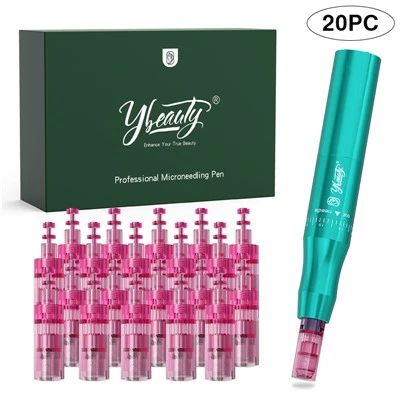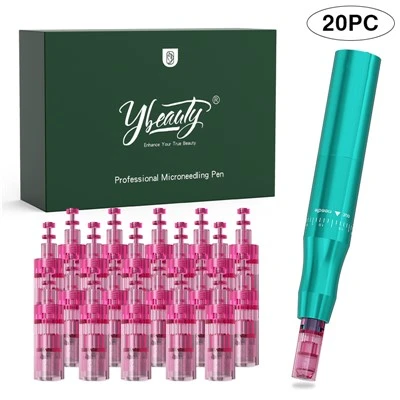
Microneedles refer to materials including metal, silicon, silicon dioxide, glass, nickel, titanium, and biodegradable polymers, etc., which are made into 10-2000μm high and 10-50μm wide using microelectromechanical system (MEMS) technology. Solid or hollow micron-sized needles.

Types of microneedles
The materials used to make microneedles mainly include metal, silicon, silicon dioxide, and biodegradable polymers. Microneedles of different materials have different characteristics and use.
1. Metal microneedle
Stainless steel, titanium, and nickel are commonly used materials for making metal microneedles. Various practical metal microneedles can be prepared by laser cutting, etching, electroplating, or ultra-precision machining. Metal microneedles are cheap and simple in technology. They are suitable for Taiwanese batch production. They are sharp and hard. They are easy to pierce the skin and not break in the skin. They are harmless to the human body. They are good materials for making microneedles. Metal micro-needles can also be prepared by electroplating metal completely or partially on the polymer or silicon micro-molds.
2. Silicon and silicon dioxide microneedles
Silicon and silicon dioxide materials are commonly used materials for the manufacture of microneedles. They have good sensing and electromechanical properties, and their micromachining processes are mature. It is easy to mass-produce, but its processing cost is higher than that of metal microneedles, and it is easy to break and stay in the skin, which is a factor restricting its development. The sharp and thin silicon microneedles can reduce the discomfort of the human body, but the surface of the silicon material will adsorb protein, which will promote the adhesion of white blood cells and the microneedles, and the pierced area may produce a stress response, so the silicon microneedles cannot be used directly Human body treatment requires modification on its surface, such as coating with a thin layer of xylene to improve its biocompatibility. In addition, the hardness of silicon microneedles is stronger than that of other materials, but they are also brittle and easy to break.
3. Polymer microneedles
In order to increase the safety of microneedles, biodegradable polymer microneedles have become another direction in the development of microneedles. Polymer microneedles have good biocompatibility, biodegradability, and low cost. Coupled with the endless emergence of new polymer materials, polymer microneedles will have good research and application prospects. However, compared with metal microneedles and silicon microneedles, the strength of this kind of microneedles is poor, plastic deformation will occur under a certain pressure, and it will be difficult to pierce the skin. The choice of materials and processing technology needs to be improved.
In summary, although silicon materials are widely used and mature in processing methods, they are relatively expensive, fragile, and non-biocompatible, while many metals are much cheaper, strong, and biocompatible, polymers are not expensive, and biocompatible and biocompatible. It is degradable and easy to handle, but its mechanical properties are not as good as the first two. Therefore, relatively speaking, metal and polymer microneedles have more promising development prospects.