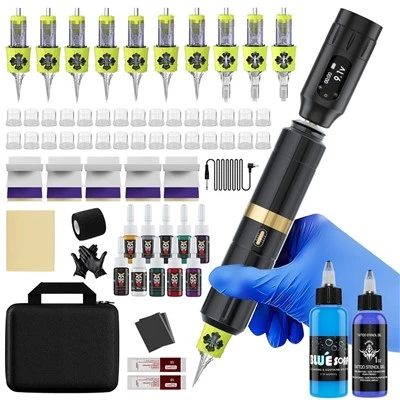
Nowadays, the tattoo methods that we all usually see are made by tattoo artists with tattoo machines, and tattoo methods such as hand needles are not common anymore. Although some people are still using it, for those tattoo artists who still use the original traditional methods, if they want to manipulate these original methods as they want, they must have excellent technology and skills to support them, which is a greater ability and challenge. Due to different times and regions, tattoo techniques have slowly evolved into different schools, and there are three common methods that are still in use today:
1. Samoan technique The Samoan technique popular in Italy was first created and popularized by Gian Mauccio Filgioni of Milan and several other tattooists. They used a small hammer to hammer the brazing bone or Hoe-shaped comb-shaped needles made of shark teeth, infuse the ink smeared on the tool into the skin. This is a relatively complex technique, the tattoo artist needs to use both hands, and one or several people are needed as assistants to tighten the skin of the tattooed person, and the overall movements of the tattoo artist and the assistant must be very coordinated.
2. Japanese-style technique synchronization Japanese-style tattoos use wooden sticks, which are a bit like chopsticks for eating. They are about 60 cm long. The back part of the hand needle is made of wood, and the front end is a metal needle row. Pigment pricks the skin.
3. American tattoo method American tattoo method is the predecessor of the tattoo machine we use most often now. It uses a small electric needle machine invented by the British and is equipped with a kind of impact needle. In fact, it is similar to the impact method of Samoa. The principle is similar, but it is automated. There are 1-7 needles at the top of the machine. Although people are generally mentally prepared, they still feel a little bit of pain. Part of this depends on the skill level of the tattoo artist, and a greater part also depends on the sensitivity of the tattoo artist and the experience of the tattoo artist.