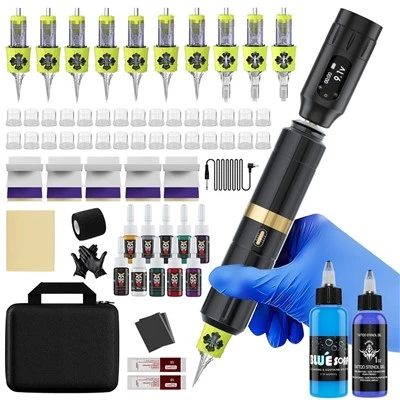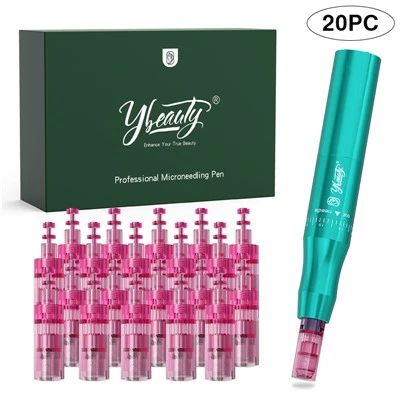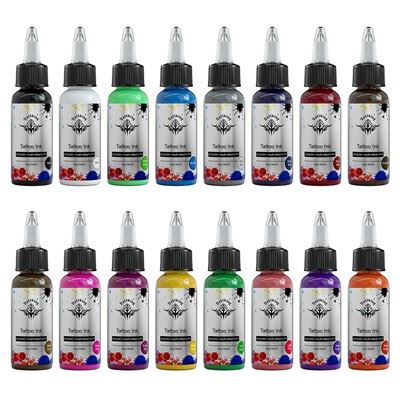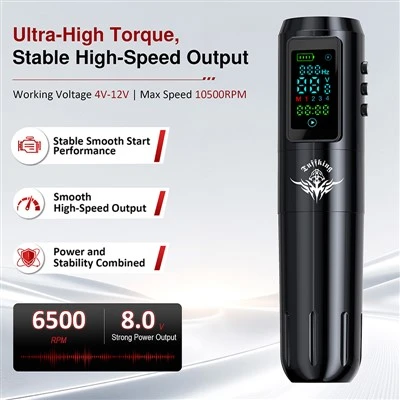
This process is widely applicable to tattoo operations.
1. Cleaning: It is best to wipe the area to be tattooed repeatedly with pure water or distilled water. (Remove skin and body hair)
2. Disinfection: Epidermis: Use medical alcohol to repeatedly wipe the area to be tattooed until thoroughly.
In-depth: In general, disinfection of broad pointers is required to be disposable in principle, but if it is disinfected and reused under special circumstances, it is best to use high temperature cooking for more than 30 minutes and then wipe with alcohol cotton before use.
3. Transfer or drawing: If you are a person with very deep artistic skills, you can paint or directly tattoo on sterile skin.
But if you don't know how to use art or for sound time, using the transfer technology is the easiest and most straightforward method. See the demonstration for detailed operations.
4. Slicing: This is one of the most critical aspects of tattooing and half of its success. If the secant is done, it means that the tattoo is half done.
So your secant line should be smooth, clear and complete. In one go. There is a rule for secant lines, which is to abide by the principles of bottom to top and right to left. This will avoid the possibility of blurred patterns or deformation of the patterns during operation. Most of the secant lines are made of black to increase the overall effect clarity. Generally speaking, the secant lines are completed by single or three stitches, which are determined according to the size and style of the pattern.
5. Fog: This part is the other half of the successful tattoo. After the completion of a tattoo, if the fog is not good, the three-dimensional feeling and liveliness will not be reflected.
Sex, let alone art. Fogging is generally done with multiple needles, which mainly depends on the mastery and proficiency of the needle method. Never use a single needle to hit the mist. The effect is only dead and lacks vitality. Fogging must be done with absolute reference to the order of coloring. In short, the patterns you make are more important and tangible.
6. Repair: This is also an important link. The above five steps are only necessary for the operation. Then the quality of the repair determines your early work.
Whether the job can get good hold. If the repair is not done well, there will be problems such as this and later problems. Such as rejection, allergies, inflammation, discoloration, etc. In fact, it is very simple to say: it is nothing more than three steps of cleaning, drying and anti-inflammatory. If the three links are coordinated, you can process them every 20 minutes, seven to eight times in a row. In the future, you can apply medicine at the appropriate time according to the situation. Do not take a shower 24 hours after the tattoo. Try to keep the wound dry. Sun protection, anti-freeze, dust-proof, anti-grip. Avoid alcohol and water.