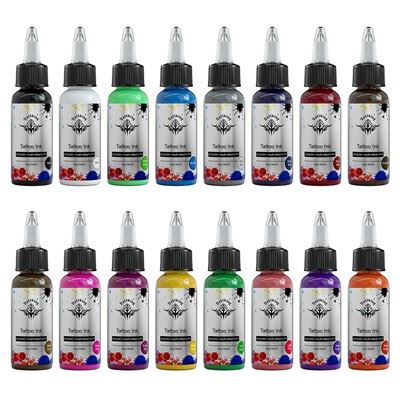
Tattoo pigments are composed of two main components: pigment and carrier.The purpose of the carrier is to ensure uniform distribution of pigments, prevent clumping, inhibit the growth of pathogens, and facilitate application to the skin.
These are some of the most common vectors:
1.Ethanol: namely alcohol. It is used to help evenly distribute the ingredients and enhance the skin's ability to absorb the above ingredients, making it a good carrier for pigments. Ethanol may be irritating, so some people experience mild skin reactions directly after tattooing, but it still depends on each person's physique.
2.Witch hazel: This is an astringent compound (meaning it shrinks or shrinks body tissues). It is usually used to relieve mild skin irritation and is often used as a carrier for pigments.
3.Glycerin: Glycerin is a humectant. Humectants are hygroscopic ingredients. They absorb moisture and bind to the skin, thereby firmly fixing the pigment under the skin.
Pigment is a confidential ingredient of many tattoo ink manufacturers. Nevertheless, some common pigments are still used in tattoo colors.
The following are some common pigments:
1. Carbon: Carbon is usually used to produce black pigments. About 18% of the human body is composed of carbon, so injecting it through a tattoo does not necessarily add any new ingredients.
2.Turmeric: Turmeric is derived from the Zingiberaceae plant and is usually used to make yellow pigments.
3.Copper salt: Copper salt is an element that makes minerals such as azurite and malachite appear blue or green. They are often used to make blue and green pigments.
4.Iron oxide: Iron oxide, usually called rust, is often used to make red pigments
In the past 20 years, the focus of colorant manufacturers has shifted from mineral pigments to organic pigments. More than 80% of the colorants used today are carbon-based, and about 60% of these organic pigments are azo pigments.
Tattoo pigments also contain many additives, such as surfactants, binders, fillers and preservatives. Many of these additives are used to keep the pigment in a uniform suspension to avoid the growth of microorganisms in the product after opening