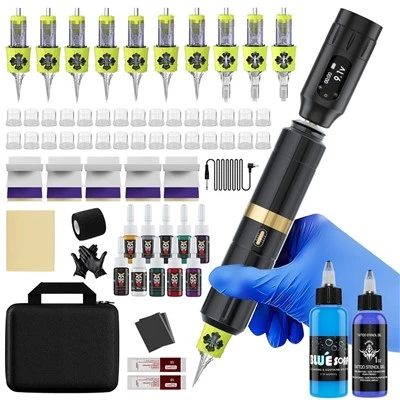
The predecessor of tattoos was tattoos. When the tattoo machine had not yet appeared, the tattoos were pierced with needles on the body one by one. The patterns were mainly based on the more popular soldiers, dragons and tigers. It’s done in the prison because the tattoos are only black, not special tattoo pigments. After a long time, the color will turn blue and blue, so it is also called a tattoo. Since the pre-Qin period, tattooing has been to tattoo the prisoner's face as a warning. In ancient classics, there have been stories of tattoos, piercings, piercings, dots, and carvings, such as mother-in-law tattoos. In "Water Margin", there are at least three important characters full of tattoos: Flower monk Lu Zhishen, Jiuwenlong Shijin and the prodigal son Yanqing. Ancient Egypt even used tattoos to distinguish social status. Victorian women in the United Kingdom popularized red on their lips, similar to modern cosmetic methods such as writing lips and eyebrows. As a result, tattoos began to gradually break away from the partial penalty that gave people a negative impression of tattoos, and evolved into a kind of personal decoration. In many cultures, tattoos are a tradition and a symbol of social class and status. The tattoo is developed on the basis of tattoos, using electric tattoo machines, special color materials, rich colors, and more patterns. With the development of society, tattoo has become a multi-disciplinary comprehensive art form, which integrates art, culture, medicine, and psychology, and has a certain marginal nature.
Tattoos were found on Egyptian mummies that were buried in 2000 BC. The records of Thracians, Greeks, Gauls, ancient Germans and ancient Britons all mention tattoos. Ancient Roman criminals and slaves wanted tattoos. After the rise of Christianity, tattooing was banned in various parts of Europe, but this style is still maintained in the Middle East and other places. When Europeans came into contact with American Indians and Polynesians during the exploration era, they once again found tattoos among these peoples. Affected by the Polynesians and the Japanese, tattoo parlors piercing flowers on European and American seamen appeared in many port cities around the world. The first electric tattoo machine was patented in the United States in 1891. The United States became the origin of new tattoo designs. Especially after the American tattoo drawings were spread all over the world, the themes of sailing life, military content, patriotism, romantic sentiment and religious enthusiasm tended to be standardized throughout the world. The style with national characteristics in the early 20th century has gradually disappeared.
In the 19th century, American criminals wanted tattoos when they were released, and British deserters wanted tattoos. Later, detainees in Siberian prisons and Nazi concentration camps were also stabbed with marks. Members of the street gang or motorcycle gang in the 20th century often used tattoo designs as a mark. In the late 19th century, tattoos were popular among men and women in the upper class of England. Tattoos have been extinct or extinct in most parts of the world, except for special medical purposes or the types of tattoos in Europe, America and Japan. These are themes that regained interest in the 1990s.
Modern tattoos are a cultural phenomenon that combines “fashion” and “popularity”. With the rise of the culture of body display, everyone can gradually accept the expression of the body. Tattoo patterns have become social works of art, and famous tattoo masters are also regarded For artists, sociologists or anthropologists will also study this violent pop culture from a popular perspective. Many artists choose tattoos to emphasize their personal style. For example, Faye Wong and Nicholas Tse once got a pair of tattoos in "couple outfits"; Beckham wrote the name of his beloved wife Victoria in four Indian characters. Write on the left forearm.