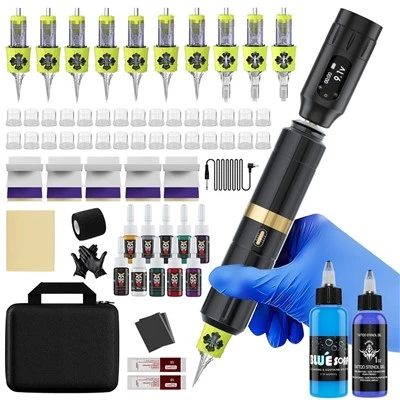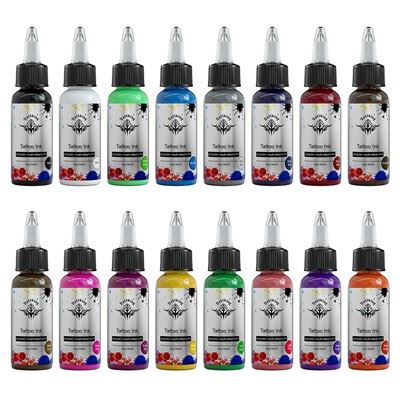
Pigment is a necessary material for every tattoo artist to create a tattoo. Just like the commonly used pigments in painting, the colors are rich and diverse. But the difference from painting on paper is that the tattoo pigment needs to be pierced into the skin through a needle. This means choosing more suitable colorants based on skin texture and human health. Then, how to identify and choose the color product that suits you has become a problem that every tattoo artist needs to consider.
Q1.What effect does the size of the pigment particles have on the tattoo?
A1: Any brand of colorant products will have different particle sizes due to different physical density and manufacturer's standards, and color pigments are generally larger than black pigments, which has become a consensus in the industry. If the particle size is true What kind of influence will it have on the tattoo may be more of an influence on the tattoo artist's use habits. Therefore, the big coffee recommends that you use a 0.35mm needle (non-divided needle type), so that it can be used regardless of the size of the pigment particles, and the adaptability of this kind of color material with a low consistency for water bias is relatively better.
Q2.What are the differences and differences between oil-based pigments and water-based pigments?
A2: Because of the small particles and high density of the water-based pigments that were common in the early days, the color tends to be bright temporarily after tattooing, but the color will fade greatly after recovery for a period of time. With the improvement of pigment formulations and processes, there are fewer and fewer water-based pigments that have such problems, and the difference between oil-based pigments and water-based pigments is gradually narrowing. Here, big coffees suggest that tattoo artists have the courage to try different brands of colorants and find the brands and colors they are accustomed to. In addition, you can also pay more attention to the similarities and differences of the color materials of each brand, which may be more helpful in choosing colorants.
Q3.Why does the color pigment have more serious precipitation after being placed for a long time?
A3: I want to explain here that it is normal that color pigments will precipitate after being placed for a long time, and all the color materials will have pigment precipitation. This phenomenon is related to the composition of the toner in the tattoo color. If there is more toner in the color, the precipitation will be more serious. Even color materials that have passed national food-grade certification and only contain trace metal elements will also experience precipitation. As long as the colorant is still within the shelf life, when the colorant precipitates, shake for 2-3 minutes to fully mix the toner and the colorant in the colorant, and then proceed to the normal operation process.
Q4.Which of super black material and normal black material is suitable for thread cutting and which is suitable for fogging?
A4: Super black material is more suitable for secant, ordinary black material is the amazing black that people often say, and it is more suitable for fogging. This is because super black material has larger particles than ordinary black material and looks darker to the naked eye. Therefore, the effect of the black element theme pattern on the skin will be fuller. If the tattoo artist likes to make realistic or European and American dark style tattoos, he can use super black to make the darkest part of the pattern, and then use ordinary black to assist in filling in other black areas.
Q5.Will the trace metal elements in color pigments cause allergies such as itching after tattooing? How to advise customers to maintain and remedy?
A5: There will be this situation, but the allergy (rejection) caused by the pigment is not the only reason for the skin allergic reaction at the tattoo site. A lot of perspiration caused by customers' exposure to the sun, drinking alcohol, or vigorous exercise after tattooing may cause allergies to the tattooed area. For example, exposure to the sun can easily cause redness and rashes on the tattooed area. Some customers' skin will be affected by the pure plants in certain brand colors. Ingredients cause allergies and discomfort. If the above situation occurs, you should promptly consult a professional for help and choose the corresponding anti-allergic ointment, but do not use aloe vera gel, because the thick texture of aloe vera gel can easily block the pores of the tattoo site and cause allergies.